
Identify the most cardio-active secretome from PCs to enhance cardiac repair
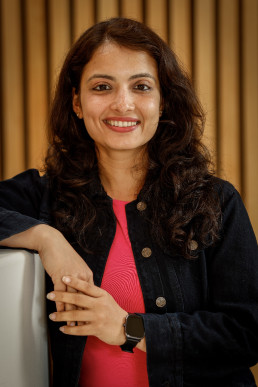
My name is Deepika Goel, and I am a doctoral researcher within the MSCA SECRET Doctoral Network, enrolled at the University of Genova (UniGe), Italy. I joined the programme in November 2025 as Doctoral Candidate 4 under the supervision of Prof. Sveva Bollini, with co-supervision from Prof. Lucio Barile and Prof. Roberta Tasso. As part of the SECRET Consortium, my research focuses on developing an innovative stem cell–derived, cell-free therapeutic strategy for cardiac repair by identifying the most cardio-active secretome produced by human amniotic fluid stem cells (hAFSCs). Building on the Bollini group’s extensive expertise in hAFSC biology and paracrine-mediated cardiac protection, my project aims to isolate, characterise, and optimise both conditioned media and extracellular vesicle formulations. Using a multidisciplinary approach—ranging from hAFSC isolation and preconditioning, to in vitro cardioprotective assays, advanced 3D heart-on-chip platforms, and in vivo validation in a myocardial infarction model—I aim to define the most effective secretome formulation capable of promoting cardiac protection, functional recovery, and tissue regeneration.
My training within the consortium will also include specialised secondments: at Universitätsklinikum Essen in Prof. Bernd Giebel’s lab to learn advanced EV isolation and purification techniques; at MIMETAS with Dr. Henriette Lanz to gain expertise in heart-on-chip systems; and at Amsterdam UMC to perform single-cell RNA sequencing on in vivo samples.
I hold a Bachelor of Engineering in Biotechnology from PESIT, India, graduating with distinction and ranking fourth at the university level, where I built a strong foundation in molecular biology, genetics, and cell culture while gaining hands-on research and teaching experience. I further strengthened this foundation during my Master of Research in Biomedical and Molecular Sciences at King’s College London, where I was awarded the “Best Performing MRes Student.” My master’s training enabled me to work across diverse areas—from cloning and protein characterisation in E. coli to investigating dietary interventions in MASLD and their impact on brain inflammation and vasculature using qPCR, histology, immunostaining, and 3D reconstruction. These experiences refined my technical skills, deepened my interest in translational research, and enhanced my ability to communicate complex scientific concepts effectively.
Alongside my academic training, I gained practical in vivo experience at the University of Sussex, where I worked as a Senior Technician in Compliance. In this role, I supported research operations while ensuring adherence to Home Office legislation and institutional safety standards. My responsibilities included colony management, breeding, and welfare monitoring of several animal models—including mice, rats, zebrafish, chicks, and snails—fostering a strong commitment to ethical and responsible research practice.
Being part of the SECRET Network allows me to bring together my interests in stem cell biology, cardiac regeneration, and translational science within an international and interdisciplinary environment. Through this PhD, I aim to deepen my understanding of perinatal cell secretomes and their therapeutic potential. My long-term goal is to contribute to the development of innovative cell-free regenerative therapies and to build a research career that bridges fundamental laboratory science with meaningful clinical impact.